The brakes missing from your pocket
Paying got faster than thinking — and three simple brakes give you back the seconds you decide in.

📰 MoneyLoop Weekly | Every week we take one topic on Egyptian households’ minds and tell you what it means for your pocket, and what to do with your money. No jargon, no recommendations.
Hi there 👋🏼,
Think of the last thing you bought from your phone. You opened the app, saw it, tapped “Buy now”, and the payment went through with one fingerprint. From the moment your eye landed on it to the moment the money left: three seconds.
In those three seconds, did you ask yourself a single question?
It used to take longer: you went to the shop, asked the price, pulled out your wallet, counted the notes and handed them over. Every one of those steps was a chance to change your mind. Those steps are gone, and the chance to think went with them.
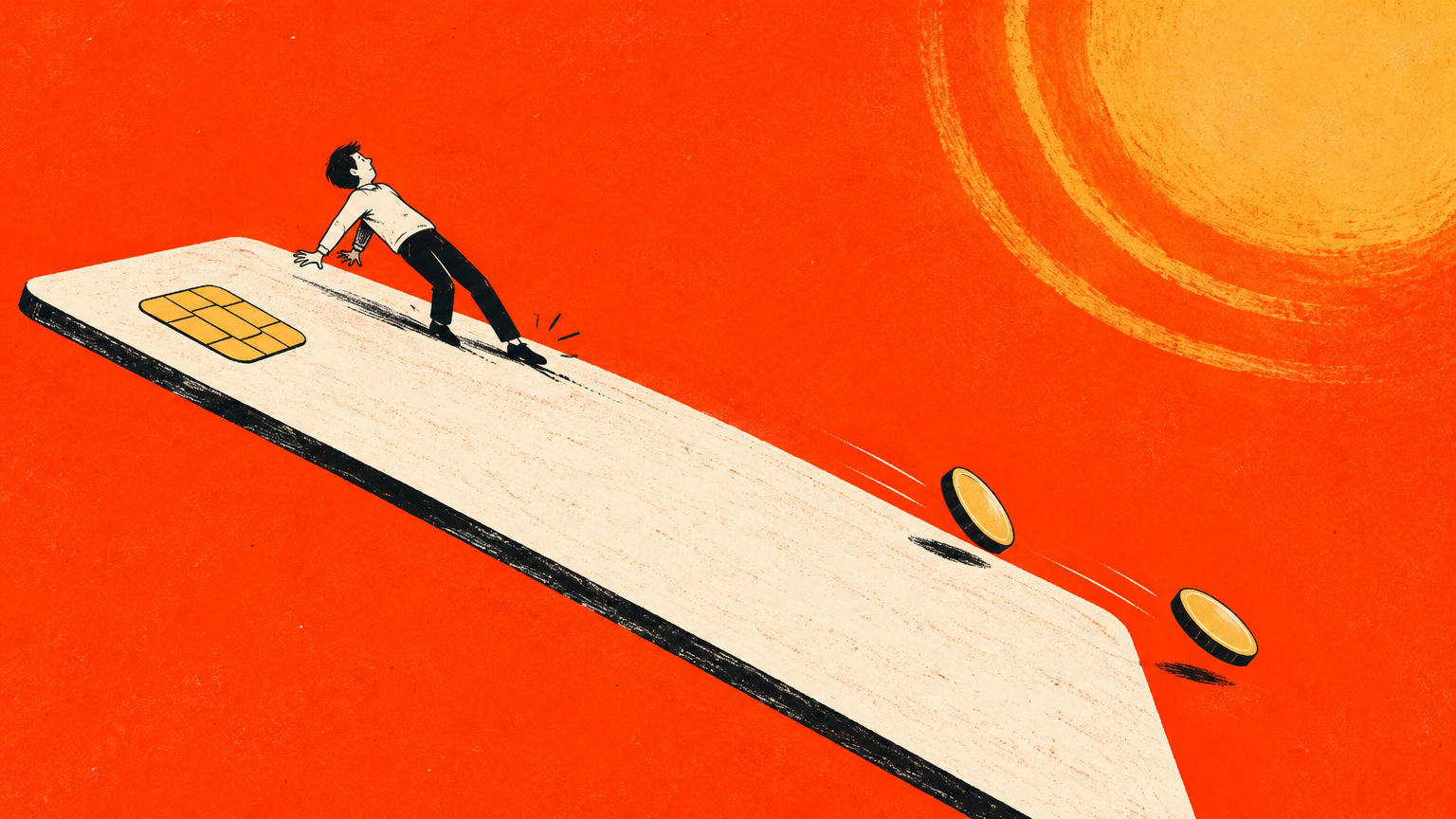
Cash used to hurt. Cards don’t.
There’s something called the pain of paying, described by the researchers Drazen Prelec and George Loewenstein in 1998. The idea is that what hurts isn’t the amount — it’s feeling the amount leave.
Cash made that feeling obvious: notes in your hand, a wallet emptying in front of you. A saved card and a fingerprint remove the feeling completely — the same amount leaves, you just don’t feel it.
So the problem isn’t that you decided to spend more. The problem is that the brakes were taken out. And a car isn’t controlled by the power of its engine — it’s controlled by its brakes.
And a brake isn’t a ban
There’s a difference between telling yourself “no” and telling yourself “wait”. Saying no fails quickly, because it makes you feel deprived. A brake asks you to give up nothing — it only asks for time.
And if you genuinely need the thing, time won’t change your decision — it will confirm it. Here are three brakes you can fit today:
1. Remove the saved card
- Delete your card details from the apps you buy from most.
- Turn off fingerprint payment in shopping apps specifically.
- Having to type the numbers every time is the brake itself: thirty seconds is enough to ask yourself one question.
2. Keep a dated waiting list 📝
- Anything you want, write it down with today’s date.
- Review the list once a week.
- Anything not on the list, wait 48 hours.
Half the list won’t interest you a week later, and the other half will be clearly worth it.
3. Turn the price into time ⏳
A price on its own is an abstract number, while time is something you feel. Before any non-essential purchase, divide the price by what you earn in an hour, and the thing turns from “a number” into “four hours of my day”. Most of the time, the question answers itself.
But what if you really need it? 🤔
Ask yourself: was this on my mind before I saw it?
- If yes, you’re carrying out an old decision, and that’s a sound purchase.
- If no, you’re replying to an ad you saw moments earlier.
No brake will stop you buying. A brake only makes what you buy a decision you actually made.
And there’s a fourth brake that asks nothing of you: feeling the amount as it leaves. In MoneyLoop, every expense is logged and categorised on its own from your bank SMS and reaches you as it happens — so the moment the card took away comes back to your pocket.
In the end,
It’s not willpower you’re missing — it’s seconds.
💬 And you? What’s the last thing you bought in three seconds and wished you’d thought about a little longer? Tell us in the comments.
This content is general financial education, not personal advice for your situation.